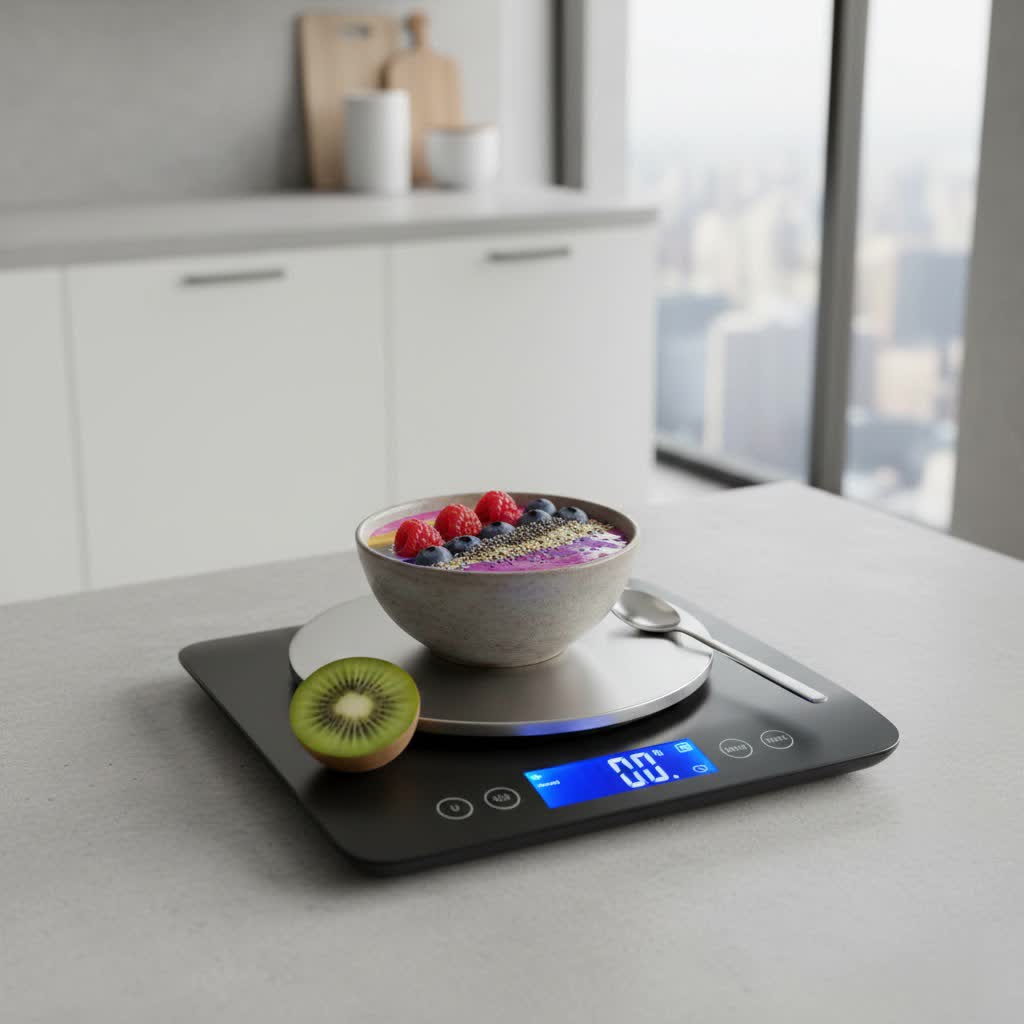
For anyone serious about cooking, baking, or managing their nutrition, a kitchen scale isn’t just a gadget—it’s an essential tool. It eliminates guesswork, ensuring your recipes turn out perfectly every time and helping you maintain precise portion control. But with so many options available, a common question arises: Analog vs. Digital Kitchen Scales—which one truly offers the accuracy you need? As an Admin for reviewtvs.com, with over a decade of experience testing hundreds of kitchen scales, I understand the critical factors that guide this decision. Let’s delve into the real differences to help you choose wisely.
Why a Kitchen Scale is Indispensable in Your Kitchen
In the culinary world, precision can be the difference between a masterpiece and a mishap. This is where a reliable kitchen scale shines, offering benefits far beyond mere ingredient measurement.
Accurate measurements are the bedrock of successful baking and cooking. Unlike volume measurements (cups and spoons) which can vary dramatically based on how ingredients are packed, weighing ingredients ensures consistent results. For instance, too much flour can make your cake dense, while a slight imbalance in liquids might prevent your bread from rising. A scale removes this variability, guaranteeing your culinary creations consistently match your expectations.
Beyond perfecting recipes, a kitchen scale is a powerful ally for health and wellness. It allows for meticulous portion control, which is vital for managing calorie intake, tracking macros, or adhering to specific dietary plans. You can easily measure precise serving sizes of ingredients like pasta, chicken, or nuts, helping you stay on track with your nutritional goals without resorting to guesswork.
Furthermore, integrating a kitchen scale into your routine can save you significant time and effort. Many digital models feature a “tare” function, allowing you to weigh multiple ingredients consecutively in the same bowl. This reduces the number of dishes you use, making cleanup quicker and more efficient. No more piles of sticky measuring cups and spoons!
The Two Main Contenders: Analog vs. Digital Scales
When it comes to kitchen scales, you’ll generally encounter two primary types: analog (mechanical) and digital (electronic). While both serve the fundamental purpose of weighing, their mechanisms, features, and overall performance vary significantly.
Analog (Mechanical) Kitchen Scales
Analog scales operate on a traditional spring mechanism, where a platform depresses a spring, moving a needle across a graduated dial to indicate weight.
Pros of Analog Scales:
- No Batteries Needed: These scales are purely mechanical, meaning they don’t require any power source, making them reliable even during power outages.
- Durability and Robustness: Often constructed with sturdy materials, analog scales can be quite durable and may withstand more rigorous use and handling compared to some electronic counterparts.
- Cost-Effective: Generally, analog scales are more affordable, making them a budget-friendly option for basic weighing needs.
- Good for “Close Enough” Measurements: For tasks where extreme precision isn’t paramount, such as portioning larger quantities of meat or vegetables, an analog scale can be perfectly adequate.
Cons of Analog Scales:
- Lower Precision: Analog scales typically round to larger increments (e.g., nearest pound or half-kilogram), making it difficult to measure minute weight differences or decimal points crucial for delicate recipes.
- Readability Challenges: The dial and needle can be prone to “parallax error,” where the reading changes depending on your viewing angle. A wobbling dial can also make exact readings challenging.
- Manual Calibration: Analog scales often require manual “zeroing” via a small dial, and they can lose accuracy over time, necessitating frequent adjustments.
- Less Portable: Due to their mechanical components, some analog scales can be bulkier and heavier, making them less convenient for transport.
|
Our Picks for the Best Digital kitchen scale in 2026
As an Amazon Associate I earn from qualifying purchases.
|
||
| Num | Product | Action |
|---|---|---|
| 1 | Etekcity Digital Food Kitchen Scale, Grams and Oz for Weight Loss, Baking and Cooking, 0.05oz/1g Precise Graduation,5 Weight Units, IPX6 Waterproof, USB Rechargeable,304 Stainless Steel-Silver, 22lb |

|
| 2 | OXO Good Grips 11-Pound Stainless Steel Kitchen Scale with Pull-Out Display - Black |
|
| 3 | Ultrean Food Scale, Digital Kitchen Scale with LCD Display, Weight Grams and Ounces for Baking Cooking and Meal Prep, 6 Units with Tare Function, 304 Stainless Steel, 11lb (Batteries Included) |
|
| 4 | Amazon Basics Digital Kitchen Scale with LCD Display, Tare Function, Multiple Units, Weighs up to 11 Pounds, Batteries Included, Black and Stainless Steel |
|
| 5 | Food Scale -33lb Digital Kitchen Scale for Food Ounces Grams Rechargeable 304 Stainless Steel,Batteries and Type-C Charging | Perfect for Meal Prep, Cooking, and Baking, Black |
|
| 6 | Food Scale, 11lb Kitchen Scale with 0.05oz/1g Precision, 6 Units Tare Function & LCD Display, Stainless Steel Digital Scale for Baking, Cooking, Meal Prep - Kitchen Gadgets & Gifts, Home Essentials |
|
| 7 | Mik-Nana Food Scale, 10kg/22lb Digital Kitchen Scale Weight Grams and Ounces for Baking Cooking Coffee Package Postage, 6 Units with Tare Function, LCD Display, Easy Clean Stainless Steel |
|
| 8 | Mik-Nana Food Scale, 22lb Digital Kitchen Scale with 6 Units Tare Function & LCD Display, Stainless Steel Weight Grams and Ounces for Baking, Cooking and Meal Prep (Batteries Included) |
|
| 9 | Etekcity Food Kitchen Scale, Digital Grams and Ounces for Weight Loss, Baking, Cooking, Keto and Meal Prep, LCD Display, Medium, 304 Stainless Steel |
|
| 10 | Nicewell Food Scale, 22lb Digital Kitchen Scale Weight Grams and oz for Cooking Baking, 1g/0.1oz Precise Graduation, Stainless Steel and Tempered Glass |
|
Digital (Electronic) Kitchen Scales
Digital scales utilize electronic sensors, often load cells, to detect weight and display it as a precise numerical value on an LCD screen.
Pros of Digital Scales:
- Superior Accuracy and Precision: This is the hallmark of digital scales. They can measure minute changes in weight, often down to 0.1 gram or fractions of an ounce, providing exact readings critical for baking and diet management.
- Easy-to-Read Display: The clear LCD display offers instant, unambiguous readings, often with backlighting for visibility in various lighting conditions. This eliminates parallax error.
- Versatile Features: Most digital scales come packed with additional functionalities like a “tare” function (to zero out container weight), unit conversion (grams, ounces, pounds, milliliters), auto-off to conserve battery, and sometimes even smart features like nutritional analysis or app connectivity.
- Compact and Portable: With their lightweight electronic components, digital scales are typically sleek, compact, and easy to store or carry.
- Faster Readings: Digital scales provide almost instantaneous weight readings, improving efficiency in the kitchen.
Cons of Digital Scales:
- Requires Power: Digital scales rely on batteries or an AC adapter, meaning they won’t function if the power runs out.
- Sensitivity to Environment: While durable, the electronic components can be sensitive to spills, excessive moisture, or rough handling, potentially affecting longevity.
- Can Be More Expensive: While basic models are affordable, feature-rich digital scales can be more expensive than their analog counterparts.
- Auto-Off Issues: Some models have an aggressive auto-off function that can be frustrating if you’re weighing ingredients gradually.
Comparing Analog and Digital Kitchen Scales
To help you visualize the key differences, here’s a direct comparison:
| Feature | Analog Scales | Digital Scales |
|---|---|---|
| Accuracy | Good for general use, less precise | High, precise (often to 0.1g/decimal points) |
| Precision | Lower, rounds to larger increments | High resolution, measures minute changes accurately |
| Readability | Dial and needle, potential parallax error | Clear LCD display, easy to read |
| Power Source | None (mechanical) | Batteries or AC adapter |
| Key Features | Basic weighing, manual zeroing | Tare, unit conversion, auto-off, smart functions |
| Durability | Generally robust and mechanical | Can be sensitive to spills/impact |
| Portability | Can be bulky, less convenient | Typically compact and lightweight |
| Cost | Usually more affordable | Varies, can be more expensive for advanced models |
| Maintenance | Manual calibration, can lose accuracy over time | Battery replacement, care for electronics |
Your Guide to Choosing the Right Kitchen Scale
Making the best choice comes down to understanding your specific needs and priorities.
Determine Your Usage Needs
Start by asking yourself a few questions:
- What will you weigh? Are you primarily measuring small amounts of spices or yeast for delicate baking, or larger quantities of flour for bread, or meat for meal prep?
- How often will you use it? Is it an everyday tool for health-conscious cooking, or an occasional aid for special baking projects?
- What’s your budget? While digital scales offer more features, basic models are quite affordable.
Essential Factors to Consider
Once you’ve identified your primary needs, evaluate these key elements:
- Accuracy & Precision: If you’re a baker, follow precise recipes, or need to meticulously track nutrition, a digital scale with high accuracy (measuring to 0.1g or 0.01 oz) is non-negotiable. For general cooking where “close enough” suffices, an analog scale might be fine.
- Capacity (Max Load): Ensure the scale can handle the maximum weight you typically need to measure. Most home kitchen scales handle up to 5-10 kg (11-22 lbs), which is sufficient for most tasks.
- Measurement Units: Digital scales almost always offer multiple units (grams, ounces, pounds, milliliters), which is incredibly convenient for international recipes or varied cooking styles. Analog scales are usually limited to one or two units.
- Additional Features: The “tare” function is a game-changer for weighing multiple ingredients. Auto-off is useful for battery life. Some advanced digital scales offer nutritional databases or smartphone connectivity.
- Material and Design: Look for durable materials like stainless steel or tempered glass that are easy to clean. Consider the footprint on your counter and how easily it can be stored.
- Brand Reputation: Investing in a reputable brand often means better quality, more reliable accuracy, and better customer support.
Tips for Using and Maintaining Your Kitchen Scale
Regardless of whether you choose an analog or digital scale, proper use and care will ensure its longevity and accuracy:
- Flat, Stable Surface: Always place your scale on a flat, level, and stable surface to get accurate readings. Uneven surfaces can significantly impact precision.
- Regular Cleaning: Wipe your scale down regularly with a damp cloth. For digital scales, avoid direct water exposure to protect the electronics.
- Avoid Overload and Impact: Do not exceed the scale’s maximum weight capacity, and handle it with care to prevent drops or impacts that could damage the internal mechanisms or sensors.
- Battery Management (Digital Scales): For digital scales, replace batteries proactively when they run low, as weak batteries can lead to inaccurate readings. Consider models with AC adapters for consistent power.
- Proper Storage: Store your scale in a dry, cool place away from extreme temperatures or humidity, which can affect its performance and lifespan.
- Regular Calibration: While digital scales are often factory-calibrated, some high-precision models allow user calibration. Analog scales typically require manual zeroing before each use.
“For consistent culinary success, particularly in baking, precise measurements are paramount. Digital scales generally offer the superior accuracy and versatility that modern kitchens demand.”
Conclusion
Choosing between an analog and a digital kitchen scale ultimately comes down to your personal cooking style, precision requirements, and budget. While analog scales offer simplicity, durability, and affordability without needing batteries, they often lack the fine-tuned precision and convenience features that many home cooks and bakers desire. Digital kitchen scales, on the other hand, provide unparalleled accuracy, a clear digital display, and a host of useful functions like tare and unit conversion, making them the preferred choice for those who value precision and efficiency.
In the end, investing in the right kitchen scale empowers you to cook with confidence, create perfect dishes, and manage your health goals with ease. So, which scale will become your trusted companion in the kitchen?