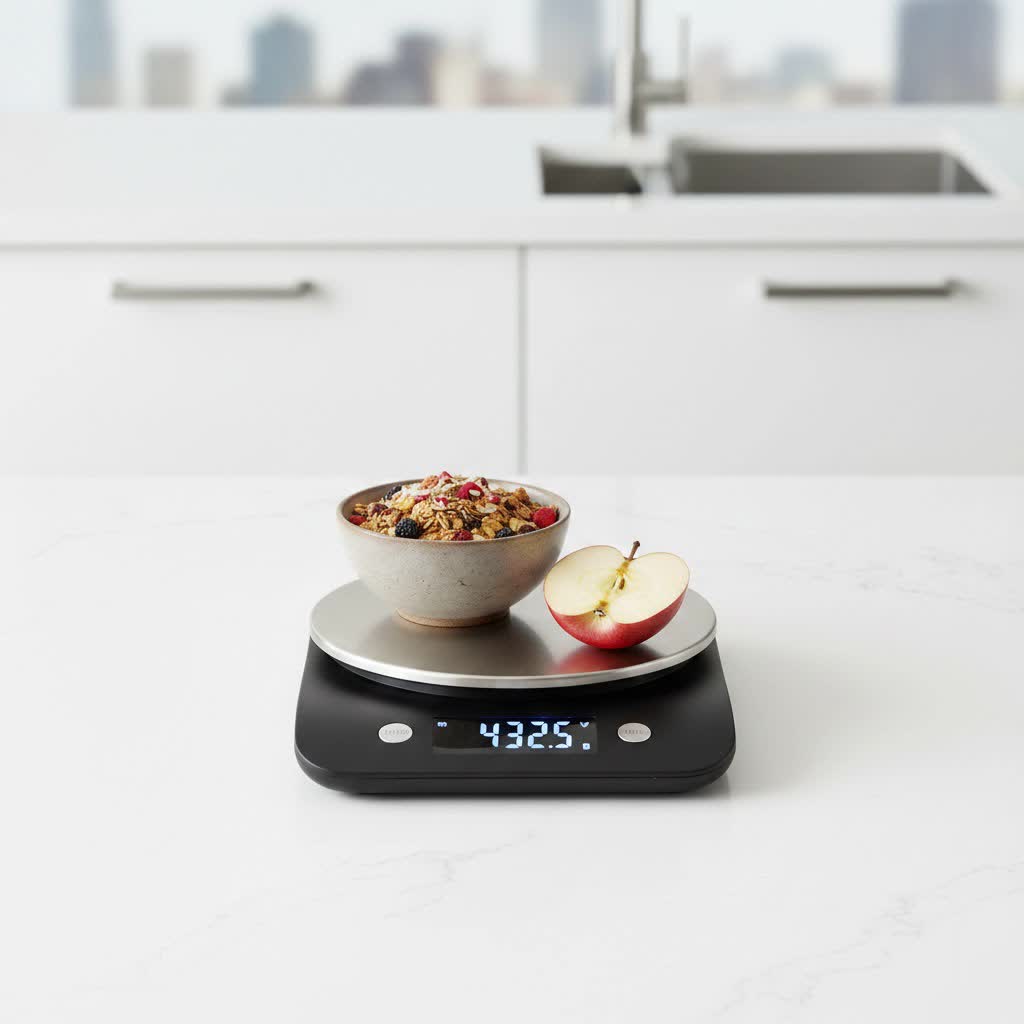
Imagine a kitchen where every surface is a smart surface, anticipating your needs and assisting your culinary endeavors with silent precision. This isn’t a scene from a sci-fi movie; it’s the near future of cooking, where kitchen scales are no longer standalone gadgets but an invisible, integral part of your countertop. The evolution of smart home technology, particularly in the kitchen, is paving the way for innovations that will transform how we prepare food, making cooking more intuitive, efficient, and enjoyable. We’re on the cusp of a culinary revolution, and integrated countertop scales are set to be a cornerstone of this intelligent kitchen ecosystem. This article delves into the exciting prospect of scales integrated into countertops, exploring the vision, benefits, enabling technologies, and the challenges that lie ahead in creating the ultimate smart cooking space.
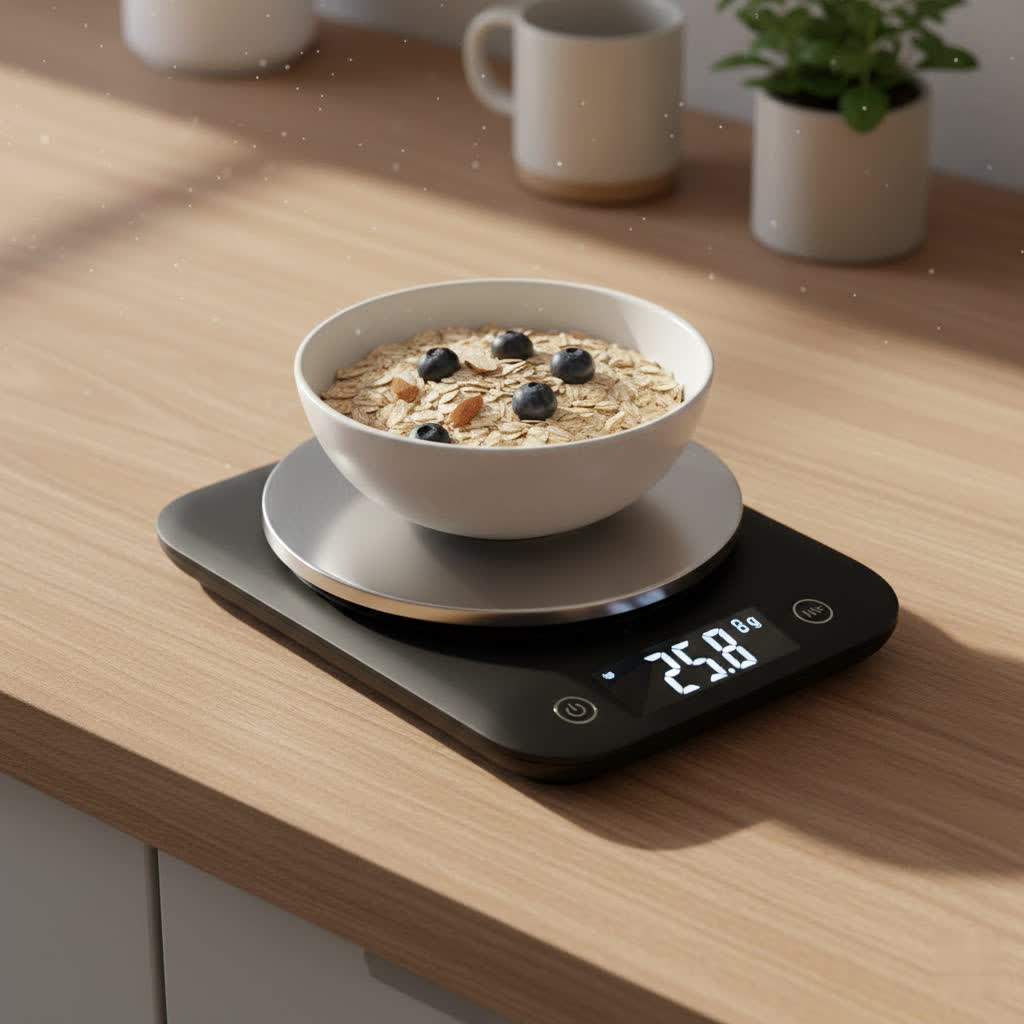
Why Kitchen Scales are Essential for Modern Cooking
In the pursuit of culinary excellence, precision is paramount. Whether you’re a seasoned chef or an aspiring home cook, the accuracy of your ingredient measurements can significantly impact the final outcome of any dish, particularly in baking where chemical reactions demand exact ratios. Digital kitchen scales have long been recognized as indispensable tools for achieving consistent, predictable results.
Beyond accuracy, these devices play a crucial role in modern health and wellness. They enable precise portion control, a vital aspect for individuals monitoring their dietary intake or managing specific health conditions. By providing exact weights, kitchen scales help eliminate guesswork, empowering you to adhere to healthy eating plans with confidence. Moreover, the efficiency they bring to the kitchen is undeniable. Measuring by weight often means fewer measuring cups and spoons to clean, streamlining the preparation process and reducing countertop clutter. The ability to directly weigh multiple ingredients into a single bowl, using the tare function to reset the scale after each addition, simplifies complex recipes and minimizes cleanup time.
The Vision: What Are Countertop-Integrated Scales?
The concept of countertop-integrated scales elevates the functionality of traditional kitchen scales to a new level of seamlessness and sophistication. Rather than a separate appliance occupying valuable counter space, this vision involves advanced weighing sensors embedded directly beneath the surface of your kitchen countertop. The countertop itself becomes the weighing platform, a continuous, uninterrupted expanse of material that silently performs its duties.
Imagine simply placing a bowl or an ingredient anywhere within a designated zone on your counter, and its weight instantly appears on a discreet display, perhaps projected onto the surface or shown on a nearby smart display. These integrated scales aren’t just about weighing; they represent a fundamental shift in kitchen design and workflow. They could manifest in various forms: an entire intelligent surface capable of weighing, specific zones dedicated to precise measurements, or modular sections that can be activated as needed. Unlike conventional smart scales that connect to apps via Bluetooth or Wi-Fi, these integrated systems would be an always-on, inherent part of your kitchen’s infrastructure, ready to assist at a moment’s notice.
Advantages of Integrated Countertop Scales
The integration of scales directly into kitchen countertops promises a multitude of benefits that transcend mere convenience, fundamentally enhancing the cooking experience.
Unparalleled Kitchen Aesthetics & Space Saving: One of the most immediate advantages is the pristine, uncluttered aesthetic it brings to the kitchen. With no bulky appliances taking up space, countertops remain clear and expansive, reflecting a modern, minimalist design philosophy. This seamless integration optimizes kitchen real estate, which is particularly valuable in smaller living spaces, and contributes to a sleek, high-tech appearance.
Enhanced Workflow & Convenience: Countertop scales would offer an unprecedented level of convenience. They are always in place, always ready to use. There’s no need to retrieve a scale from a cabinet, set it up, or put it away. The tare function could be activated with a simple touch or even voice command, allowing for effortless sequential weighing of multiple ingredients directly in your mixing bowl. This streamlined workflow reduces interruptions and makes the cooking process feel more fluid and natural.
Advanced Smart Kitchen Integration: This is where integrated scales truly shine. They would become vital components of a larger smart kitchen ecosystem. Picture a scenario where your countertop scale is linked to your smart oven, recipe app, or even a nutritional tracking platform. As you weigh ingredients, the system could automatically adjust recipe quantities, provide real-time nutritional information, or guide you through complex steps. This level of connectivity transforms the act of cooking into an interactive, data-rich experience, offering personalized advice and automated adjustments. The global smart kitchen appliances market is projected to reach an astounding $141.78 billion by 2030, highlighting the growing consumer demand for such integrated, intelligent solutions.
Hygiene and Easy Cleaning: With a completely flat, uninterrupted surface, cleaning becomes a breeze. There are no nooks, crannies, or separate parts for food particles to get trapped. A simple wipe-down is all that’s needed to maintain a hygienic cooking environment, contributing to better food safety and reduced cleaning time.
Technological Innovations Enabling This Future
Bringing countertop-integrated scales from concept to reality relies heavily on cutting-edge technological advancements across several fields.
Advanced Sensor Technology: The core of these systems lies in highly sensitive and durable load cell sensors. These sensors must be thin enough to be integrated beneath various countertop materials (like quartz, granite, or solid surface) without compromising their structural integrity or appearance. They need to deliver exceptional accuracy, measuring even minute quantities with precision, while also being robust enough to withstand the daily wear and tear of a busy kitchen, including spills, heat, and heavy loads.
Wireless Connectivity and IoT Protocols: Seamless operation requires robust wireless communication. Technologies like Wi-Fi, Bluetooth, and emerging IoT (Internet of Things) protocols would enable the scales to connect effortlessly with smart devices, kitchen appliances, and cloud-based recipe platforms. This connectivity would allow for real-time data transfer, remote monitoring, and automated recipe adjustments, making the scales a true hub within the connected home. The smart kitchen market’s growth, fueled by IoT integration, underscores the importance of this seamless communication.
Seamless User Interfaces: The interaction with integrated scales would move beyond traditional buttons and displays. Innovations in projected displays could show weight readings directly onto the countertop surface, disappearing when not in use. Haptic feedback could provide tactile responses, while advanced voice control systems would allow users to tare, change units, or access nutritional information hands-free. These intuitive interfaces would enhance user experience, making interaction feel natural and effortless.
Power Management and Material Science: Integrated scales would require efficient power solutions, potentially incorporating wireless charging capabilities embedded within the countertop itself or ultra-low power sensors that minimize energy consumption. On the material science front, research into new composite materials that are both aesthetically pleasing and optimized for sensor integration, durability, and responsiveness would be crucial. These materials would need to be resilient to temperature changes, moisture, and impact, ensuring the longevity and reliability of the integrated system.
Challenges and Considerations
While the promise of integrated countertop scales is exciting, several challenges must be addressed before they become a commonplace reality.
Installation & Cost: Integrating scales directly into countertops would likely involve complex installation processes and significantly higher costs compared to standalone digital scales. This could make them a premium feature, initially limiting their accessibility to a broader market. The manufacturing process for such specialized countertops would also need to be scaled efficiently.
Durability & Repair: The countertop endures daily abuse from chopping, spills, and heat. Ensuring the embedded sensors and electronics can withstand these harsh conditions over many years without losing accuracy or functionality is a significant engineering hurdle. Repairs would also be more complicated and costly than simply replacing a portable scale, potentially requiring professional intervention or even countertop replacement.
Calibration & Maintenance: Maintaining the accuracy of an embedded scale could present unique challenges. Unlike portable scales that can be easily calibrated or replaced, an integrated system would require robust, long-term calibration stability. Specialized maintenance procedures might be needed to address issues like sensor drift or environmental interference.
Privacy & Data Security: As part of a larger smart kitchen ecosystem, integrated scales would generate and transmit data, potentially including precise details about your dietary habits and cooking routines. Ensuring robust data privacy and cybersecurity measures would be paramount to protect user information from potential breaches or misuse.
Standardization Across Brands: For seamless integration into a diverse smart home, a degree of standardization across different kitchen appliance and smart home platforms would be beneficial. Without common protocols, consumers might face compatibility issues, hindering the widespread adoption of these advanced features.
Transforming the Culinary Experience
The advent of scales integrated into countertops promises to revolutionize the culinary experience in profound ways. From the initial stages of ingredient preparation to comprehensive meal planning, these systems will act as intelligent partners in your kitchen. Imagine a scale that doesn’t just measure flour, but understands it’s for a bread recipe and automatically adjusts the water content suggestion based on ambient humidity.
These smart surfaces can evolve into personalized cooking assistants, offering real-time guidance, troubleshooting tips, and even nutritional breakdowns as you cook. They can make advanced culinary techniques more accessible to home cooks by ensuring exact measurements, which is critical for consistent results in baking and complex dishes. Beyond practical utility, integrated scales offer an educational aspect, subtly teaching users about ingredient densities, portion sizing, and the science of cooking through their seamless, interactive feedback. This technology encourages a deeper connection with food preparation, fostering creativity and confidence in the kitchen.
Conclusion
The vision of scales integrated into countertops represents an exciting leap forward in the evolution of the smart kitchen. By combining precision measurement with unparalleled design integration and intelligent connectivity, this technology promises to transform our cooking spaces into more efficient, intuitive, and aesthetically pleasing environments. While challenges related to cost, durability, and technical implementation remain, the rapid growth of the smart kitchen market and advancements in sensor technology suggest that this future is not a distant dream but a tangible reality on the horizon.
Imagine a kitchen where every surface is not just a workspace, but an intelligent helper, anticipating your needs and seamlessly assisting your culinary journey. Are you ready for a kitchen that truly weighs in on your cooking success?
Frequently Asked Questions
When can I expect to see countertop-integrated scales in homes?
|
Our Picks for the Best Digital kitchen scale in 2026
As an Amazon Associate I earn from qualifying purchases.
|
||
| Num | Product | Action |
|---|---|---|
| 1 | Etekcity Digital Food Kitchen Scale, Grams and Oz for Weight Loss, Baking and Cooking, 0.05oz/1g Precise Graduation,5 Weight Units, IPX6 Waterproof, USB Rechargeable,304 Stainless Steel-Silver, 22lb |

|
| 2 | Mik-Nana Food Scale, 10kg/22lb Digital Kitchen Scale Weight Grams and Ounces for Baking Cooking Coffee Package Postage, 6 Units with Tare Function, LCD Display, Easy Clean Stainless Steel |
|
| 3 | Food Scale, 11lb Kitchen Scale with 0.05oz/1g Precision, 6 Units Tare Function & LCD Display, Stainless Steel Digital Scale for Baking, Cooking, Meal Prep - Kitchen Gadgets & Gifts, Home Essentials |
|
| 4 | Nicewell Food Scale, 22lb Digital Kitchen Scale Weight Grams and oz for Cooking Baking, 1g/0.1oz Precise Graduation, Stainless Steel and Tempered Glass |
|
| 5 | Food Scale -33lb Digital Kitchen Scale for Food Ounces Grams Rechargeable 304 Stainless Steel,Batteries and Type-C Charging | Perfect for Meal Prep, Cooking, and Baking, Black |
|
| 6 | Amazon Basics Digital Kitchen Scale with LCD Display, Tare Function, Multiple Units, Weighs up to 11 Pounds, Batteries Included, Black and Stainless Steel |
|
| 7 | OXO Good Grips 11-Pound Stainless Steel Kitchen Scale with Pull-Out Display - Black |
|
| 8 | Etekcity Food Kitchen Scale, Digital Grams and Ounces for Weight Loss, Baking, Cooking, Keto and Meal Prep, LCD Display, Medium, 304 Stainless Steel |
|
| 9 | Ultrean Food Scale, Digital Kitchen Scale with LCD Display, Weight Grams and Ounces for Baking Cooking and Meal Prep, 6 Units with Tare Function, 304 Stainless Steel, 11lb (Batteries Included) |
|
| 10 | Mik-Nana Food Scale, 22lb Digital Kitchen Scale with 6 Units Tare Function & LCD Display, Stainless Steel Weight Grams and Ounces for Baking, Cooking and Meal Prep (Batteries Included) |
|
While early prototypes and concepts exist, widespread commercial availability is likely several years away. We might see premium custom kitchen installations featuring this technology within the next 3-5 years, with broader market adoption following as costs decrease and technology matures.
Will these integrated scales be as accurate as standalone digital scales?
The goal is for integrated scales to match or even surpass the accuracy of high-quality standalone digital scales. Advancements in sensor technology are continuously improving precision, and proper calibration and robust engineering will be critical for achieving reliable and consistent measurements.
How will cleaning and maintenance work for integrated scales?
Integrated scales are designed to enhance hygiene and ease of cleaning. The seamless surface means spills can be wiped away easily without affecting internal components. Maintenance would likely involve software updates and periodic professional calibration checks to ensure long-term accuracy and functionality.
What are the potential privacy concerns with smart kitchen integration?
Any smart appliance connecting to the internet poses privacy considerations. Integrated scales could track cooking habits and dietary data. Manufacturers will need to implement robust encryption and clear user data policies, giving users control over their information and ensuring secure data handling.